
From Spreadsheets to Self-Service: Automating the Approvals That Slow Your Business Down
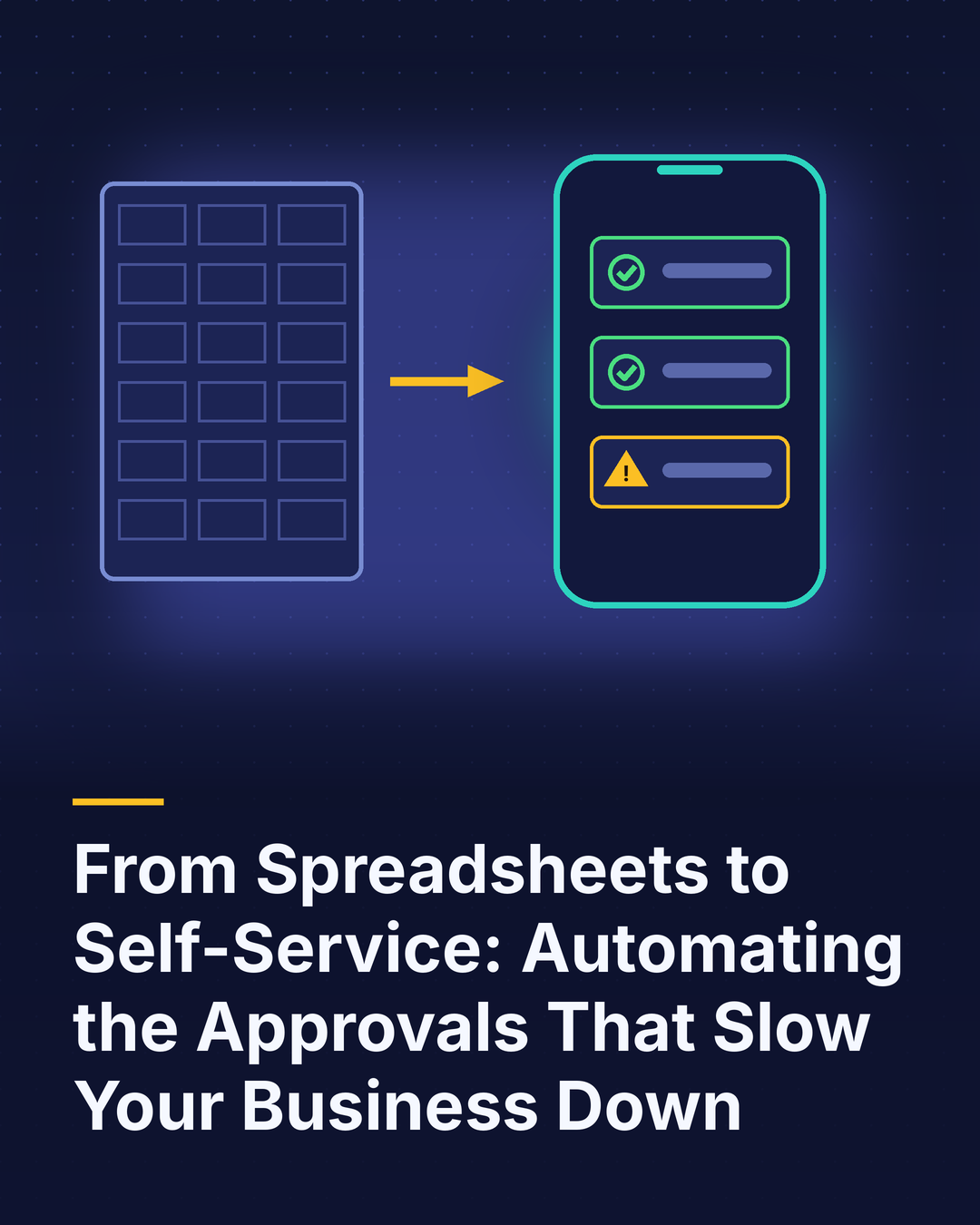
Ask any manager where time disappears in their organization and approvals will feature prominently in the answer. A purchase request waits for a signature. A software license sits in someone’s inbox. A contract exception circulates by email until someone remembers to chase it. Each individual delay may seem minor, but collectively they slow the business considerably and frustrate the people who depend on a timely decision.
The Problem With Informal Approval Processes
In many organizations, approvals still run on a combination of email, shared spreadsheets and institutional memory. A requester completes a form, attaches it to a message and sends it to whoever they believe should approve it. The approver may be travelling, may not recognize the request as urgent or may forward it to a colleague without telling anyone. The requester has no visibility into where the request stands.
This arrangement creates several difficulties beyond simple delay.
- Inconsistent controls. The same type of request may be approved by different people depending on who happened to receive it.
- Poor auditability. Reconstructing who approved what, and when, becomes a time-consuming exercise when auditors or regulators ask.
- Hidden workload. Approvers have no consolidated view of what is waiting for them, so important items are easily missed.
- Frustrated employees. People spend time chasing decisions rather than doing productive work.
What Good Approval Automation Looks Like
A well-designed approval workflow begins with a self-service request, typically through a portal or catalog where the employee selects what they need and provides only the information required for that request type. The system then applies rules-based routing, sending the request to the correct approver based on criteria such as cost center, amount, risk level or region.
Approvers receive notifications in the channels they already use, including email, mobile devices and collaboration tools, and can act with a single action. If an approver is unavailable, delegation and escalation rules ensure the request does not stall. Every action is recorded automatically, creating a complete audit trail without additional effort.
Critically, the approval is only one step in a larger flow. Once approved, the workflow should trigger the fulfillment activity itself, whether that is provisioning access, raising a purchase order or notifying a vendor. Automating the approval while leaving fulfillment manual simply moves the bottleneck.
Reducing Approvals, Not Merely Accelerating Them
Automation also creates an opportunity to question whether every approval is necessary. Many approval steps were introduced to compensate for a lack of visibility or control. When a workflow platform enforces policy automatically, low-risk requests can often be pre-approved within defined thresholds, freeing approvers to focus on decisions that genuinely require judgment.
A sensible approach is to review approval data after the first few months of operation. Requests that are approved nearly every time, with little or no modification, are strong candidates for automatic approval.
The Bottom Line
Approvals are among the most common and most frustrating sources of delay in the enterprise, and they are also among the most straightforward to automate. Moving from spreadsheets and email to self-service requests with rules-based routing, mobile approvals and automatic fulfillment improves speed, control and auditability at the same time. The greater prize, however, lies in using the resulting data to eliminate approvals that add little value. Organizations that take this step free their managers to concentrate on decisions that genuinely matter, and give employees the responsive experience they now expect.