
Hybrid File Storage: Keeping Large Files Fast at Remote Sites
I grew up in the Bay Area, where fast internet feels like a given. Then I spent a summer visiting a friend who managed a construction project two hours outside Fresno. Her team’s trailer had a connection that could barely load email. Opening a 300 MB design file from the cloud? Forget it. They’d start the download, grab lunch, and hope.
That trip opened my eyes to a challenge plenty of companies face every day. The cloud is fantastic, but not every location has the bandwidth to use it smoothly. That’s where hybrid file storage comes in.
What hybrid storage means
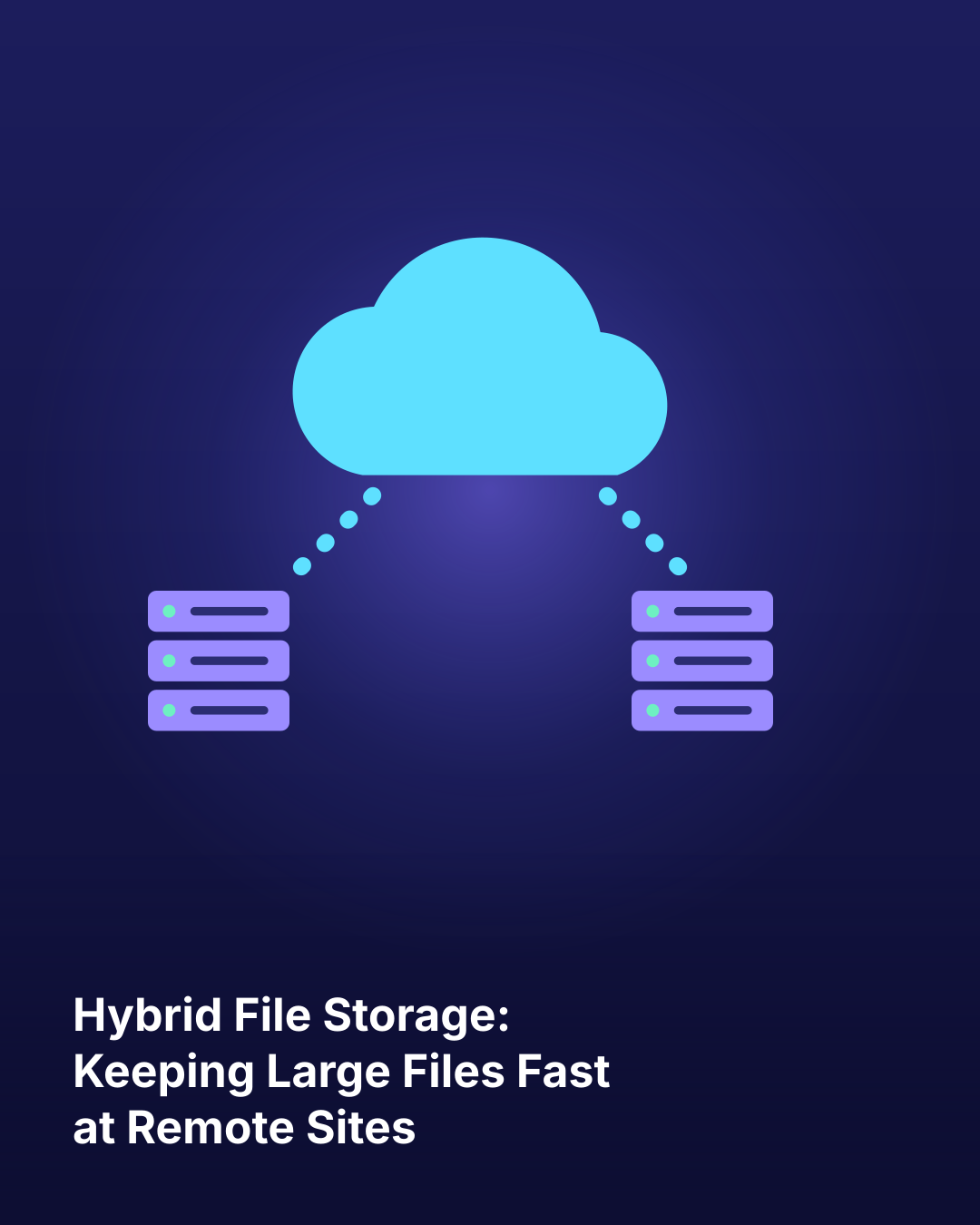
Hybrid storage blends the cloud with local storage at specific sites. The cloud serves as the central home for all files, while a small local device or cache keeps frequently used files close to the people who need them.
When someone opens a file, it loads from the local copy at full office-network speed. Changes sync back to the cloud in the background, so everyone else stays up to date.
Who benefits most
This setup shines for teams that work with big files in places with limited connectivity:
- Construction and engineering firms with job-site trailers
- Manufacturing plants with large CAD and production files
- Media and creative teams editing video and high-resolution images
- Retail, energy, and field operations spread across rural locations
Getting the balance right
The smartest hybrid setups don’t try to store everything locally. They keep the active project files on-site and leave archives in the cloud. Many platforms handle this automatically by learning which files people use most.
It’s also worth planning for the unexpected. If the internet goes down at a remote site, local storage lets work continue. When the connection returns, everything syncs up.
The Bottom Line
Hybrid file storage gives remote and bandwidth-limited sites the best of both worlds: the central access and flexibility of the cloud plus the speed of local storage. Teams stop waiting on downloads and start getting more done, wherever they work. For companies with field offices or heavy files, it’s one of the simplest ways to boost productivity and morale at the same time. My friend’s crew switched to a hybrid setup the following year, and she says lunch breaks are finally just for lunch.