
Building the Network for AI Clusters: Ethernet Fabrics in the Modern Data Center
Artificial intelligence clusters place extraordinary demands on data center networks. Training large models requires thousands of accelerators to exchange enormous volumes of data continuously. Any delay in this exchange leaves expensive accelerators waiting idle. The network has become a critical determinant of AI performance and cost. Ethernet, the dominant networking technology in data centers, has evolved rapidly to meet these demands.
Why AI Networks Are Different
Traditional data center traffic consists of many independent flows between users and applications. AI training traffic is very different. Accelerators frequently perform collective operations in which all participants exchange data simultaneously. These bursts are large and synchronized, and the slowest connection determines how quickly the entire operation completes. The network must therefore provide high bandwidth, low latency and, critically, minimal packet loss.
Enhanced Ethernet for AI
Modern Ethernet fabrics for AI incorporate several enhancements. Congestion control mechanisms prevent traffic from overwhelming switches. Lossless transport features ensure packets are not dropped. Adaptive routing distributes traffic across available paths. Very high port speeds, now reaching 400 and 800 gigabits per second, provide the necessary bandwidth. Industry efforts are standardizing these capabilities to ensure interoperability across vendors.
Fabric Architecture
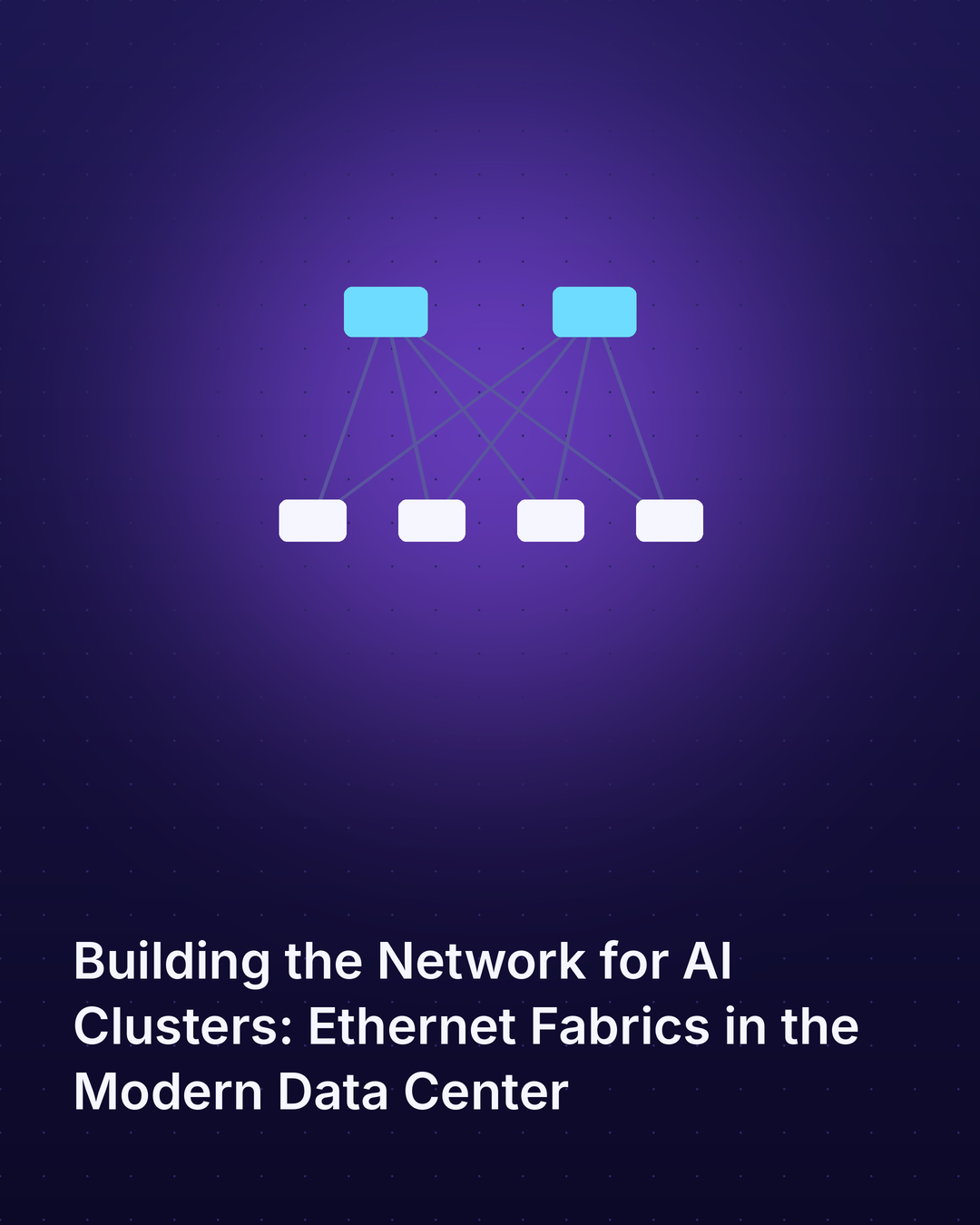
AI clusters typically use spine-leaf or similar architectures that provide many equal paths between any two accelerators. Some designs separate the network connecting accelerators from the network handling storage and management traffic, preventing interference.
Automation and Management
Configuring and managing large AI fabrics manually would be impractical. Automation tools that design, deploy and validate fabric configurations reduce errors and accelerate deployment. Monitoring tools provide visibility into congestion and performance.
Why Ethernet
Ethernet offers broad vendor choice, familiar operational tools and the ability to use the same technology across AI and general data center networks. These advantages have driven its growing adoption for AI clusters.
Planning for Growth
AI clusters tend to expand. Fabrics should be designed to scale without disruptive redesign. Staff training is another consideration, since operating AI fabrics requires familiarity with congestion management and performance tuning that general data center teams may not yet have.
The Bottom Line
The network is central to AI cluster performance, and modern Ethernet fabrics have evolved to meet the challenge. Congestion control, lossless transport, adaptive routing and very high speeds deliver the performance AI training requires. Automation makes large fabrics manageable. Ethernet’s ecosystem and familiarity add further advantages. Organizations building AI infrastructure should treat the network as a first-class design concern from the outset.