
Connecting Siloed Systems: The Case for a Single Platform for Enterprise Workflows
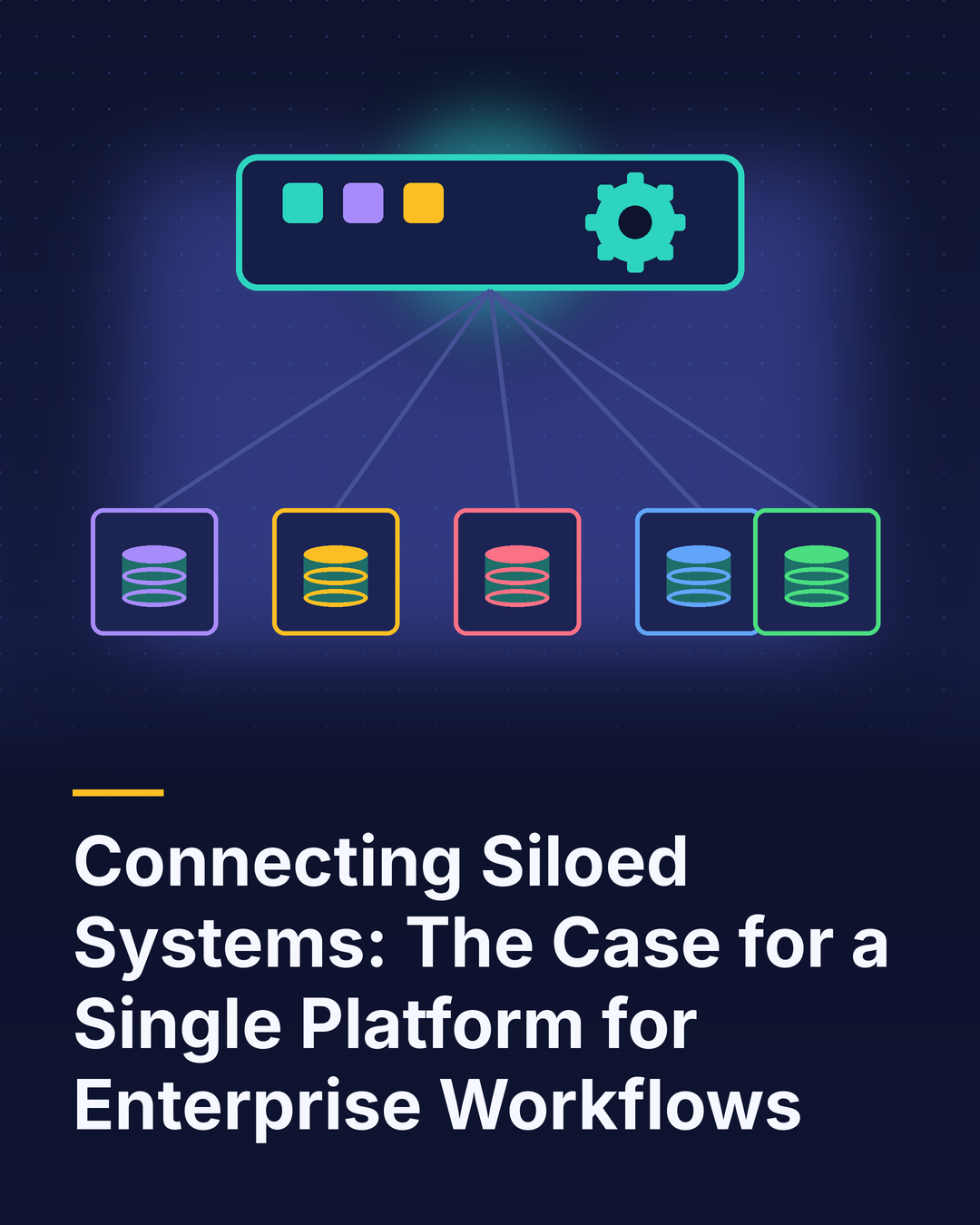
The typical large enterprise operates hundreds of applications. Many were selected for sound reasons at the time, by individual departments seeking the best tool for their particular needs. The cumulative result, however, is a fragmented landscape in which information is duplicated, processes are disjointed and no one has a complete view of how work flows across the organization.
The Consequences of Fragmentation
Siloed systems impose costs that extend well beyond licensing and maintenance.
- Inconsistent data. An employee, asset or customer may be recorded differently in each system, making reliable reporting difficult.
- Brittle integrations. Point-to-point connections between applications multiply over time and break when any single system changes.
- Fragmented experiences. Employees must learn several portals to request help from IT, human resources and facilities, each with its own conventions.
- Limited visibility. Leaders cannot see end-to-end performance because each system reports only on its own portion of the work.
These problems become more acute as organizations introduce artificial intelligence. AI agents require consistent data and clearly defined processes to act reliably. Fragmentation undermines both.
What a Single Workflow Platform Provides
Consolidating enterprise workflows onto a single platform does not mean replacing every system of record. Financial, manufacturing and human capital systems typically remain in place. The workflow platform sits above them, providing a common layer for requests, approvals, tasks and service delivery.
This approach offers a shared data model, so that core entities mean the same thing across departments. It provides one experience for employees and customers, regardless of which team ultimately fulfills a request. It allows reusable components, such as approval rules, notifications and integrations, to be built once and used everywhere. And it delivers unified analytics across the full lifecycle of work.
Approaching Consolidation Pragmatically
Consolidation is most successful when undertaken progressively. Organizations commonly begin with IT service management, where the platform’s value is well established, and then extend the same foundation to human resources, customer service, security operations and other functions. Each extension reuses existing data and components, so the marginal cost of adding new workflows declines over time.
The Bottom Line
Fragmented systems have become one of the principal obstacles to efficiency, visibility and the effective use of AI. A single workflow platform, sitting above existing systems of record, unifies data, experiences and processes without requiring disruptive replacement. Organizations that pursue this consolidation thoughtfully will find each new initiative faster and less expensive to deliver. They will also be considerably better positioned to deploy AI across the enterprise, because the foundation those agents depend on will already be in place.